

Published on 17.09.2026 г.
5 Costly Mistakes When Choosing a Business Partner
Choosing a business partner rarely appears to be a risky decision at the moment it is made. However, this is often where the most expensive problems begin—through uncollected receivables, weakened liq...
5 Costly Mistakes When Choosing a Business Partner
Choosing a business partner rarely appears to be a risky decision at the moment it is made. However, this is often where the most expensive problems begin—through uncollected receivables, weakened liquidity, and reputational damage that is built slowly but lost quickly.
In an environment marked by increasing debt levels, pressure on liquidity, and heightened uncertainty, partner due diligence is no longer an administrative step—it is a fundamental component of business protection.
The biggest mistake companies make is not that they collaborate with a risky partner, but that they recognize the risk too late—only after contracts are signed, goods are delivered, or services are completed.
When Scale Creates False Confidence
One of the most common business misconceptions is the belief that a company with high revenue automatically represents a reliable and stable partner. On the surface, large scale can indeed appear convincing. However, revenue alone says very little about whether a company meets its obligations on time, how leveraged it is, what its cash flow looks like, or whether its profitability is sustainable.
This is where the first critical mistake occurs—replacing analysis with perception. A company may have significant market presence while simultaneously facing rising short-term liabilities, declining profits, or weak operating performance. In such cases, size is not a guarantee of stability—it can sometimes be a better-disguised risk.
Revenue is not the same as financial stability, and every serious decision requires a broader view of the company’s operational structure.
Liquidity Signals Come from History, Not from Contracts
The second major mistake is failing to review the history of account blockages and enforcement actions, even though these often reveal how a company behaves under pressure.
A single short-term blockage does not necessarily indicate a serious issue. However, repeated blockages, prolonged restrictions, or frequent enforcement actions signal weaknesses in obligation management or liquidity sustainability.
Many companies appear stable during negotiations, but their history reveals a very different level of financial discipline. If a partner frequently operates under liquidity pressure, the risk of delayed payments, defaults, or disrupted cooperation becomes significantly higher.
In business practice, the past is not just a record—it is often the most reliable predictor of future behavior.
Credit Rating Is Not Formality—It’s a Condensed Risk Signal
The third mistake is ignoring credit ratings and risk profiles, especially when decisions are based on personal relationships, recommendations, or a strong first impression.
In reality, a credit rating is not a decorative metric—it is a synthesized signal that integrates multiple aspects of financial health, liquidity, leverage, and performance stability.
When a company falls into a higher-risk category, it is rarely accidental. It usually reflects specific financial weaknesses—such as increased debt, reduced ability to service obligations, unstable results, or higher exposure to market pressure.
Trust without analysis is not partnership—it is exposure. Companies that neglect this step often pay a much higher price than anticipated.
Risk Is Often Not in the Company, but in the Network Around It
The fourth mistake is analyzing only the individual company without examining its ownership and management connections.
In modern business environments, risk is rarely isolated. It often spreads through shared ownership, related executives, affiliated companies, or group structures—where a problem in one entity can quickly affect others.
This is particularly relevant when a seemingly stable company is part of a broader network with financial weaknesses. In such cases, the balance sheet alone does not tell the full story.
Relationship analysis reveals what traditional financial checks often miss—whether a company is part of a broader risk system. Hidden risk is rarely in the numbers alone, but in the connections behind them.
Speed Helps in Sales, but Hurts in Risk Assessment
The fifth mistake is making decisions under time pressure—when the urgency to close a deal pushes analysis aside.
This is a common situation in business practice, especially when there is strong commercial interest, pressure to execute, or fear of missing an opportunity. However, this is exactly when companies compromise their own protection.
The time required to properly assess a partner is almost always significantly shorter than the time and cost required to fix the consequences of a wrong decision.
Unpaid receivables, disrupted supply chains, or damaged reputation are not easily repaired. Speed only has value when it is supported by insight—not when it replaces evaluation.
Key Insights
What Lies Behind These Mistakes
At a deeper level, all these mistakes share a common root—companies often confuse business opportunity with business security.
A potential partner may have a strong market presence, convincing scale, a recognizable name, or an attractive offer, which creates a perception of low risk. In reality, risk is rarely visible on the surface.
It is found in financial structure, liquidity behavior, credit ratings, and network connections.
This is the fundamental difference between intuitive and intelligent decision-making. Intuition may help identify opportunities, but it is not sufficient to assess exposure.
Companies that systematically analyze financial statements, liquidity, debt levels, blockages, and related parties are not more distrustful—they are more responsible.
In today’s environment, due diligence is not a sign of distrust—it is a professional standard.
What This Means for Companies
For companies, this means that choosing a business partner must be treated as a risk management decision—not just a commercial one.
A partner should not be evaluated solely on what they offer, but also on their ability to maintain stable, predictable, and financially secure cooperation.
This creates a clear opportunity. Companies that base their decisions on data, analysis, context, and risk profiling are more likely to protect liquidity, avoid problematic partnerships, and achieve sustainable growth.
In practice, the real advantage is not just finding a partner—but choosing the right one.
Conclusion
A wrong business partner rarely creates problems immediately. However, when the consequences arise, they typically impact both liquidity and reputation—making prior analysis far more valuable than any later correction.
Financial data, credit ratings, liquidity, and network connections are not just tools for verification—they are essential for making smarter and safer business decisions.
Biznis Mreža – Business Intelligence Platform by Target Group
The data and information published on this page are the property of Biznis Mreza and are intended for informational purposes. Unauthorized use and distribution of the content is prohibited, and any reference to the published information must clearly credit Biznis Mreza as the source.
Related analyses
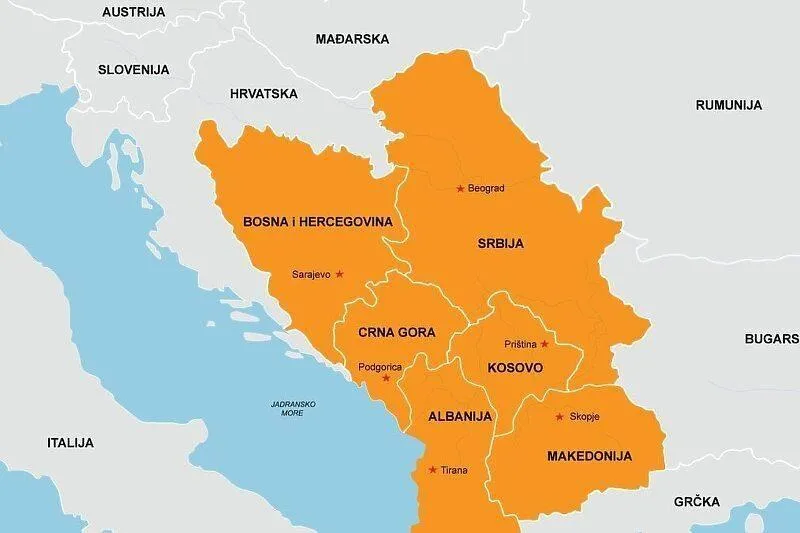
Western Balkan Companies in North Macedonia: €1.1 Billion in Revenue, but Not the Same Level of Stability
Companies in North Macedonia owned by legal entities and individuals from the Western Balkans generate over €1.1 billion in revenue, employ more than 8,300 people, and produce over €65 million in prof...
Read more
Labor Market in North Macedonia 2025: 433,000 Positions and an Economy Driven by Volume, Not Value
In 2025, the labor market in North Macedonia is defined by scale, with over 150,000 job postings and 433,000 demanded positions, providing one of the most detailed insights into actual workforce deman...
Read more