


Published on 17.09.2026 г.
Labor Market in North Macedonia 2025: 433,000 Positions and an Economy Driven by Volume, Not Value
In 2025, the labor market in North Macedonia is defined by scale, with over 150,000 job postings and 433,000 demanded positions, providing one of the most detailed insights into actual workforce deman...
Labor Market in North Macedonia 2025: 433,000 Positions and an Economy Driven by Volume, Not Value
In 2025, the labor market in North Macedonia is defined by scale, with over 150,000 job postings and 433,000 demanded positions, providing one of the most detailed insights into actual workforce demand. The median salary of €400 (25,000 MKD) further defines the framework within which the majority of the economy operates.
However, behind these numbers lies a fundamental question: is this a market that creates value, or one that is sustained through mass, operational labor?
Demand Structure: An Economy That Works, but Does Not Scale
The majority of workforce demand is concentrated in several key sectors—trade, manufacturing, hospitality, administrative services, construction, and transport—which together account for more than half of total employment.
This distribution is not random. It directly reflects an economic structure dominated by activities that require continuous physical or operational engagement, rather than high technological or intellectual value.
As a result, the labor market is organized around volume rather than productivity, limiting the potential for faster economic growth.
Job Positions: Volume Over Specialization
Demand is heavily concentrated in roles such as sales assistants, general workers, waiters, warehouse staff, drivers, and production workers. This indicates a structure dominated by low-specialization jobs with high replaceability.
In such a system, competitiveness is not built on expertise or knowledge, but on the availability of labor, creating downward pressure on wages and limiting salary growth.
This means the economy operates on quantity rather than quality of labor.
Salaries as a Signal of Limited Productivity
The median salary of €400 is not just a statistic—it is a direct indicator of overall productivity. When 75% of salaries are below €480 (30,000 MKD) and 90% below €620 (38,000 MKD), it becomes clear that the majority of the market operates within a narrow and low-income range.
This suggests a structure where value creation per employee is limited, which in turn restricts salary growth.
At the same time, a small segment of the market—IT, healthcare, education, and management—operates at significantly higher income levels, creating a clear divide between two distinct labor markets.
As a result, the market is split between a large operational segment and a smaller high-skilled segment, highlighting a structural imbalance.
Company Size as a Stability Factor
Data shows that salaries gradually increase with company size, which is a logical outcome of stronger financial capacity and more developed organizational structures.
Larger companies not only offer higher wages but also greater predictability—an important advantage in attracting and retaining talent in an unstable labor market.
This means that higher-quality jobs are concentrated within larger systems, while smaller companies compete within a more limited resource environment.
Flexibility or Uncertainty
The fact that 60% of employment contracts are fixed-term indicates a market that is dynamic and adaptable, but also one that transfers part of the risk onto workers.
For companies, this provides flexibility and cost control. For employees, it means lower security and limited long-term stability.
This balance creates a system that functions efficiently in the short term, but faces challenges in building long-term human capital.
Key Insights
What Lies Behind the Numbers
The analysis shows that the Macedonian economy operates under a model based on intensive labor use, rather than productivity growth.
This creates a cycle where companies need more people to grow, instead of generating higher value with fewer resources.
In such a structure, growth is naturally limited, wages rise slowly, and competition for labor gradually increases—especially in segments where talent shortages already exist.
The real challenge is not the number of jobs, but their value—how much they contribute to overall economic growth.
What This Means for Companies
In this environment, salary alone is no longer sufficient as a tool for attracting talent. New factors become increasingly important—stability, working conditions, organizational culture, and opportunities for development.
Companies that create clear structures, predictability, and invest in their workforce will gain a significant competitive advantage, especially in segments where competition for talent is intensifying.
The key difference will be made by those who view labor not as a cost, but as an investment.
Conclusion
The labor market in North Macedonia in 2025 shows activity and scale, but its structure reveals limitations in productivity and value creation.
This means the true picture is not reflected in the number of positions, but in the type of economy that stands behind them.
Biznis Mreža – Business Intelligence Platform by Target Group
The data and information published on this page are the property of Biznis Mreza and are intended for informational purposes. Unauthorized use and distribution of the content is prohibited, and any reference to the published information must clearly credit Biznis Mreza as the source.
Related analyses
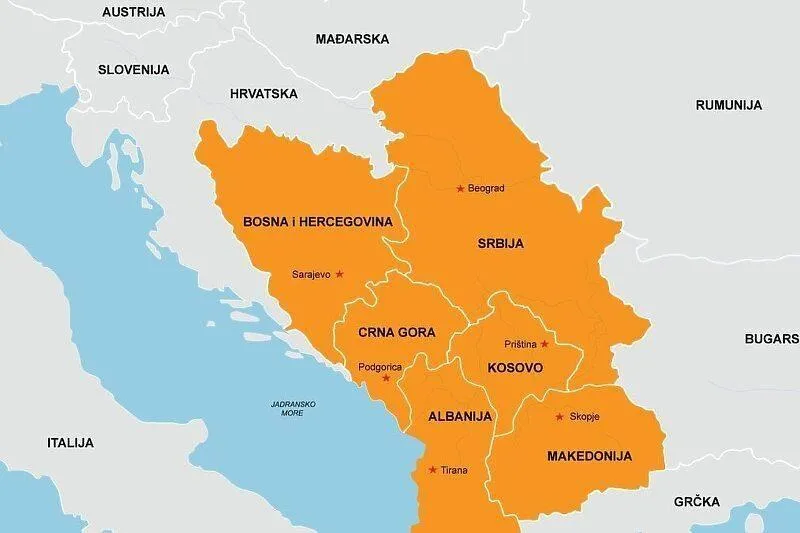
Western Balkan Companies in North Macedonia: €1.1 Billion in Revenue, but Not the Same Level of Stability
Companies in North Macedonia owned by legal entities and individuals from the Western Balkans generate over €1.1 billion in revenue, employ more than 8,300 people, and produce over €65 million in prof...
Read more
5 Costly Mistakes When Choosing a Business Partner
Choosing a business partner rarely appears to be a risky decision at the moment it is made. However, this is often where the most expensive problems begin—through uncollected receivables, weakened liq...
Read more